Wall Tie Calculator
Estimate how many wall ties you need for a cavity wall, including openings, tie density, wastage, packs and optional material cost.
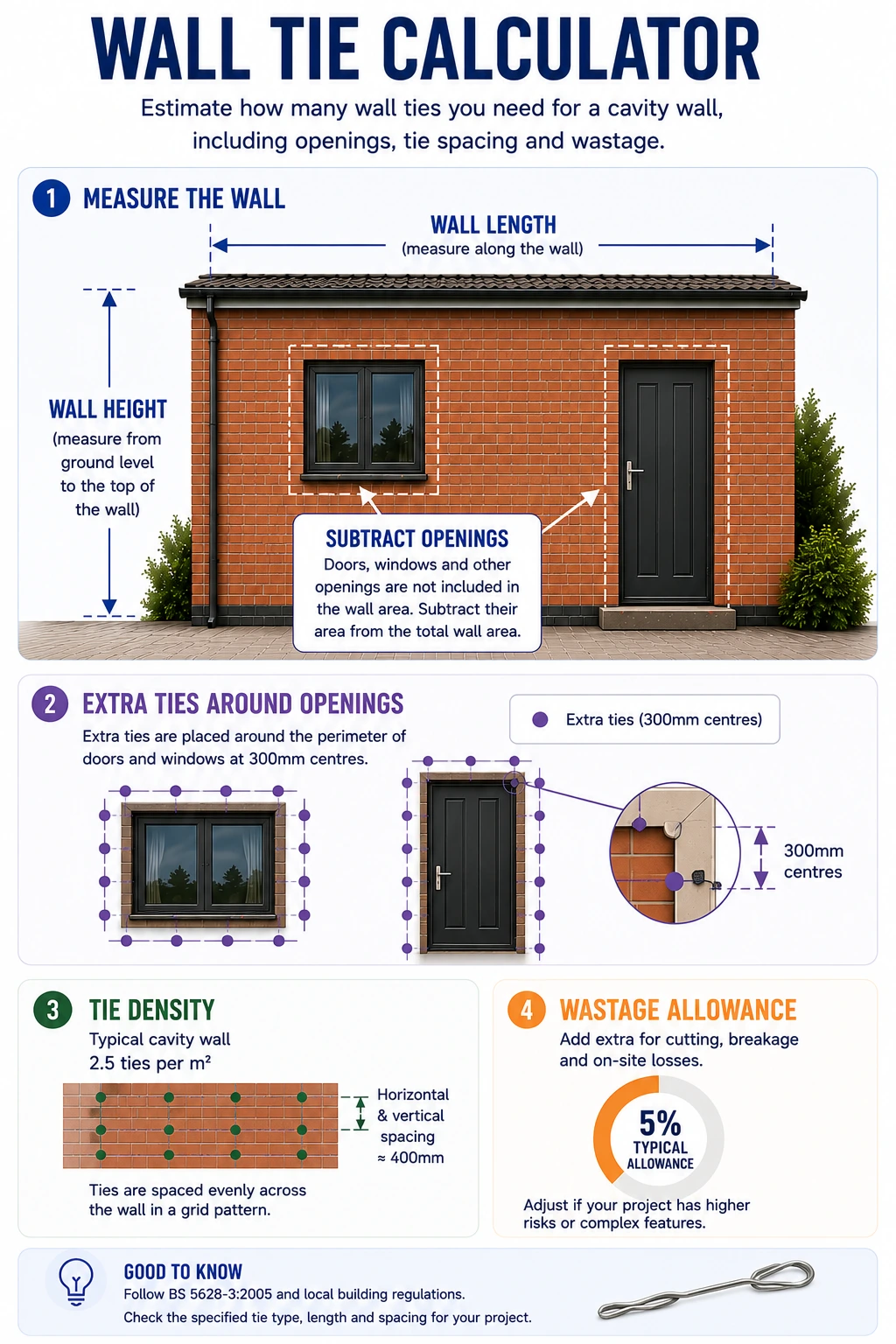
- Base wall ties are calculated from the net wall area after subtracting openings.
- Default standard density: 2.5 wall ties per m².
- The 3.7 ties per m² option is a closer-spacing example and should only be used where the project design or specification calls for it.
- When enabled, extra opening ties are estimated at both vertical jambs using a maximum vertical spacing of 300mm.
- Wastage allowance: 5%
- Opening positions are not entered, so this calculator cannot detect overlapping openings.
- Results are for planning and estimation purposes only — not a structural specification.
Use this wall tie calculator to estimate how many cavity wall ties you need for a block or brick wall. Enter the wall length and height, subtract windows or doors, choose a tie density, add wastage, and estimate packs or material cost.
The calculator supports metric and imperial measurements, includes extra ties around openings, and gives a clear breakdown of wall area, base ties, opening ties, wastage, packs required and cost per m².
If you’re estimating all the materials for a cavity wall, use our cavity wall calculator to calculate bricks, blocks, insulation, wall ties and mortar together.
PRO TIP: For real ordering, check the wall tie type, cavity width, exposure zone and manufacturer’s guidance before buying. Wider cavities, high-exposure locations or engineered walls may need a different tie type or closer spacing.
How to Use the Wall Tie Calculator
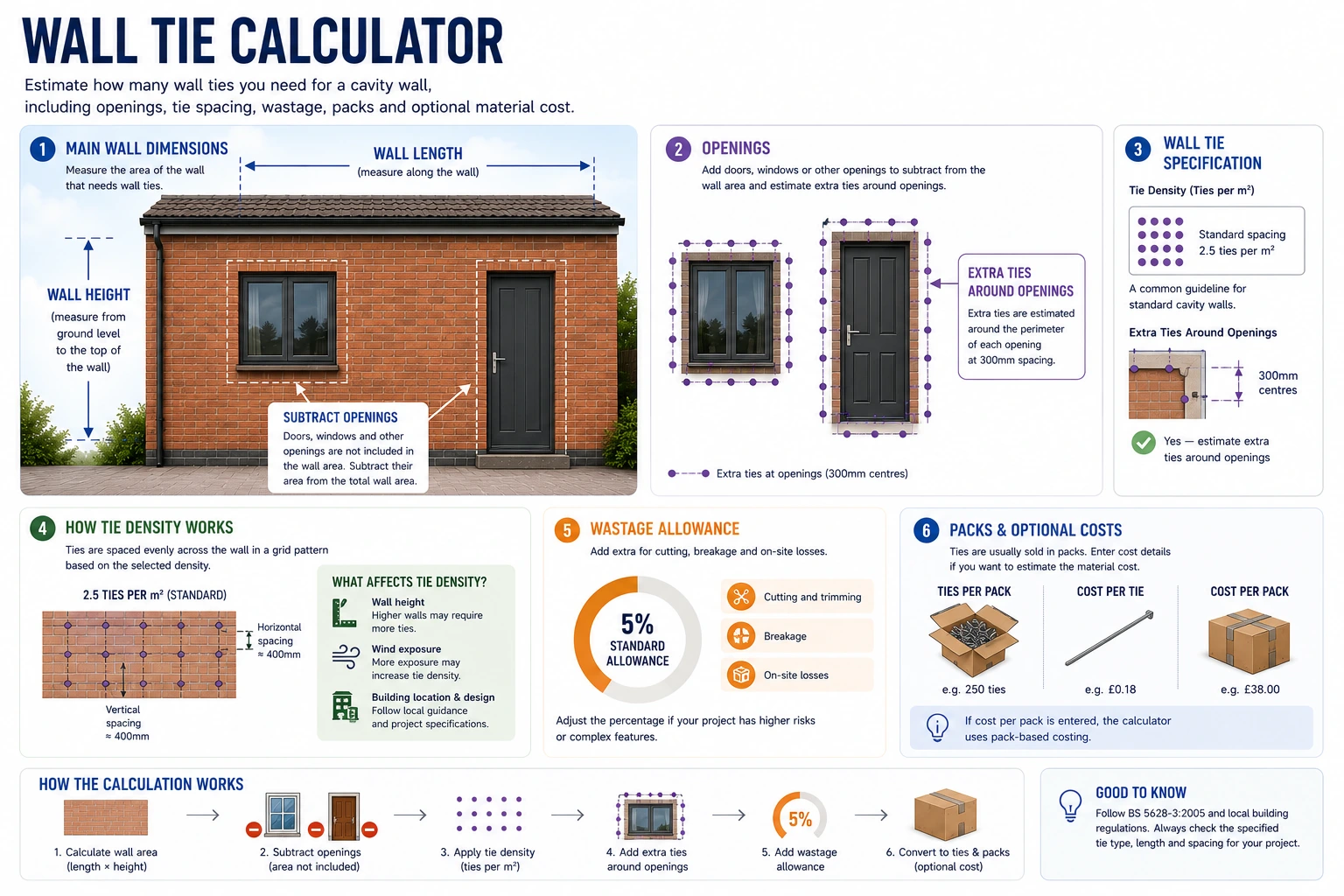
Start by measuring the full wall length and height. This gives the gross wall area before openings are removed.
Next, add each opening separately. For example, add windows, doors, patio doors or large service openings. The calculator subtracts their area from the wall and, when enabled, estimates extra ties around the opening perimeter.
Choose the tie density preset. The standard option uses 2.5 ties per m², which aligns with common UK cavity wall guidance for masonry leaves at least 90mm thick. UK guidance also commonly refers to 900mm horizontal and 450mm vertical spacing, with closer spacing around openings.
Add wastage to cover cuts, site losses, ordering margin or measurement changes. Then enter the ties per pack and optional costs if you want pack quantities and estimated material spend.
Results Explanation
The main result shows the total number of wall ties to order, including the selected wastage allowance and any extra opening ties.
The detailed results show:
- Gross Wall Area: full wall length × height
- Openings Area: total area of doors, windows and other openings
- Net Wall Area: gross wall area minus openings
- Tie Density: selected ties per m²
- Base Wall Ties: ties needed for the net wall area
- Extra Opening Ties: extra ties estimated around openings
- Wastage Allowance: additional ties added as a percentage
- Packs Required: rounded up from the total ties and pack size
- Estimated Material Cost: based on either cost per pack or cost per tie
- Cost Per m²: estimated cost divided by net wall area
How the Maths Works
The calculator converts all measurements to metres first. Imperial feet and inches are converted using:
feet × 0.3048 + inches × 0.0254
It then calculates:
Gross wall area = wall length × wall height
For openings:
Opening area = opening width × opening heightOpening perimeter = 2 × (width + height)
The net area is:
Net wall area = gross wall area − openings area
If openings exceed the wall area, the net area is capped at zero and a warning is shown.
Base ties are calculated as:
Net wall area × selected ties per m²
The result is rounded up to the next whole tie.
If extra opening ties are switched on, the calculator uses:
Opening perimeter ÷ 0.3
This estimates ties at 300mm spacing around openings, then rounds up.
Before wastage:
Base ties + opening ties
After wastage:
Total ties = before-wastage ties × (1 + wastage % ÷ 100)
The final total is rounded up. If the pack size is entered:
Packs required = total ties ÷ ties per pack
Packs are also rounded up, because you normally need to buy whole packs.
For costs, the calculator uses pack-based costing first when the cost per pack is entered. Otherwise, it uses cost per tie.
Common Mistakes to Avoid
Do not measure only the brick face that remains after openings. Measure the full wall first, then enter windows and doors separately.
Do not forget extra ties around openings. UK guidance commonly requires closer placement near openings and vertical edges, so this can noticeably increase the total.
Do not rely on a calculator as a structural design. Wall ties are part of the wall’s structural stability, so follow the approved design, Building Regulations and manufacturer instructions.
Do not mix up cost per tie and cost per pack. If you enter cost per pack, the calculator bases the estimate on full packs required.
FAQ
How many wall ties do I need per square metre?
For many standard UK masonry cavity walls, 2.5 wall ties per m² is commonly used, often equivalent to 900mm horizontal by 450mm vertical spacing. Always check the project specification and the wall tie manufacturer’s guidance.
Do I need extra wall ties around windows and doors?
Yes, extra ties are normally needed around openings and vertical edges. This calculator estimates them using the opening perimeter and 300mm spacing.
What type of wall tie should I use?
That depends on cavity width, masonry type, exposure conditions, building height and the design specification. Stainless steel wall ties are commonly used, but the correct type should be selected from the manufacturer’s guidance or project drawings.
Are wall ties a Building Regulations issue?
Yes. Wall ties affect the stability of cavity walls, so the correct spacing, type and installation should follow the approved design and relevant UK guidance.
How does the calculator handle openings?
It subtracts the opening area from the wall area. If extra opening ties are enabled, it also estimates additional ties around the opening perimeter.
Why are packs rounded up?
Wall ties are usually bought in full packs, so the calculator rounds up to the next whole pack when a pack size is entered.
related calculators
Disclaimer
This calculator is for estimating and planning only. It is not a structural specification.
Wall tie requirements can vary depending on cavity width, wall height, exposure, masonry type, insulation, building design and manufacturer instructions. For structural work, unusual walls, remedial wall tie replacement or high-exposure sites, consult a qualified professional.