Concrete Stairs Calculator
Estimate concrete volume, bagged concrete, ready-mix quantity, wastage and material cost for concrete steps and staircases.
- Stair type: solid filled steps.
- Wastage allowance: 10%
- Bag yield is estimated from the selected bag size.
- Advanced adjustments include uneven landing, leveling pad, drainage and site allowance fields.
- Results are for planning and material estimation only, not structural design.
Use this concrete stairs calculator to estimate concrete volume for steps, stairs and landings, including m³, bag quantities, ready-mix volume, wastage and material cost. Enter the total rise, going, stair width, riser setup and construction type, then add wastage and optional prices.
It supports metric and imperial inputs, plus advanced allowances for uneven ground, over-excavation, drainage fall, levelling pads and site tolerances.
PRO TIP: For outdoor steps, check the riser height and going before ordering concrete. A small change in riser count can make the stairs more comfortable and may also reduce wasted concrete.
How to Use this Calculator
Start by measuring the total vertical rise from the lower finished level to the upper finished level. Then enter the tread depth, also called the going, and the full width of the stairs.
Use Auto calculate risers for a quick estimate based on a target riser height of around 170mm, or choose Enter number of risers if you already know the exact stair layout.
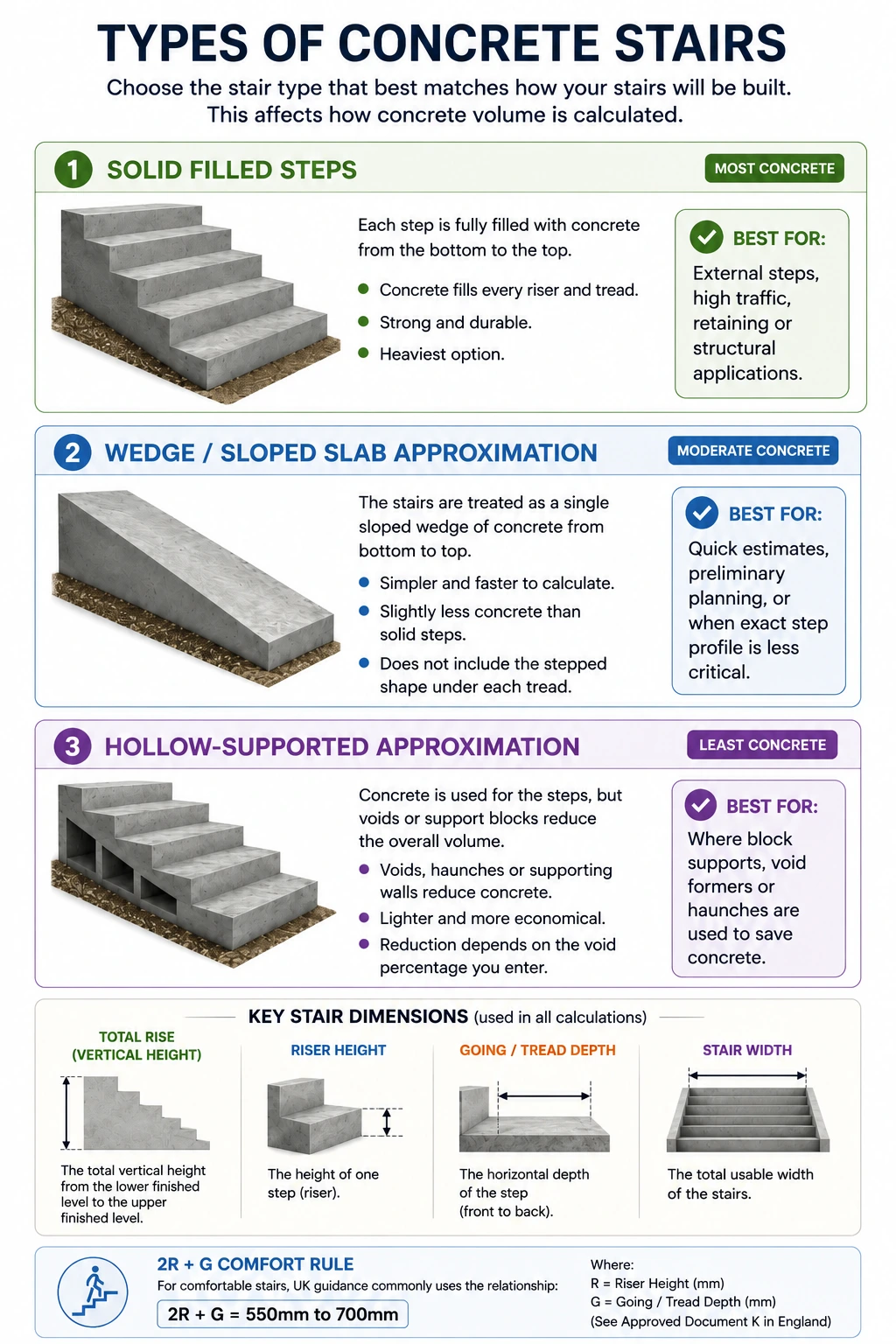
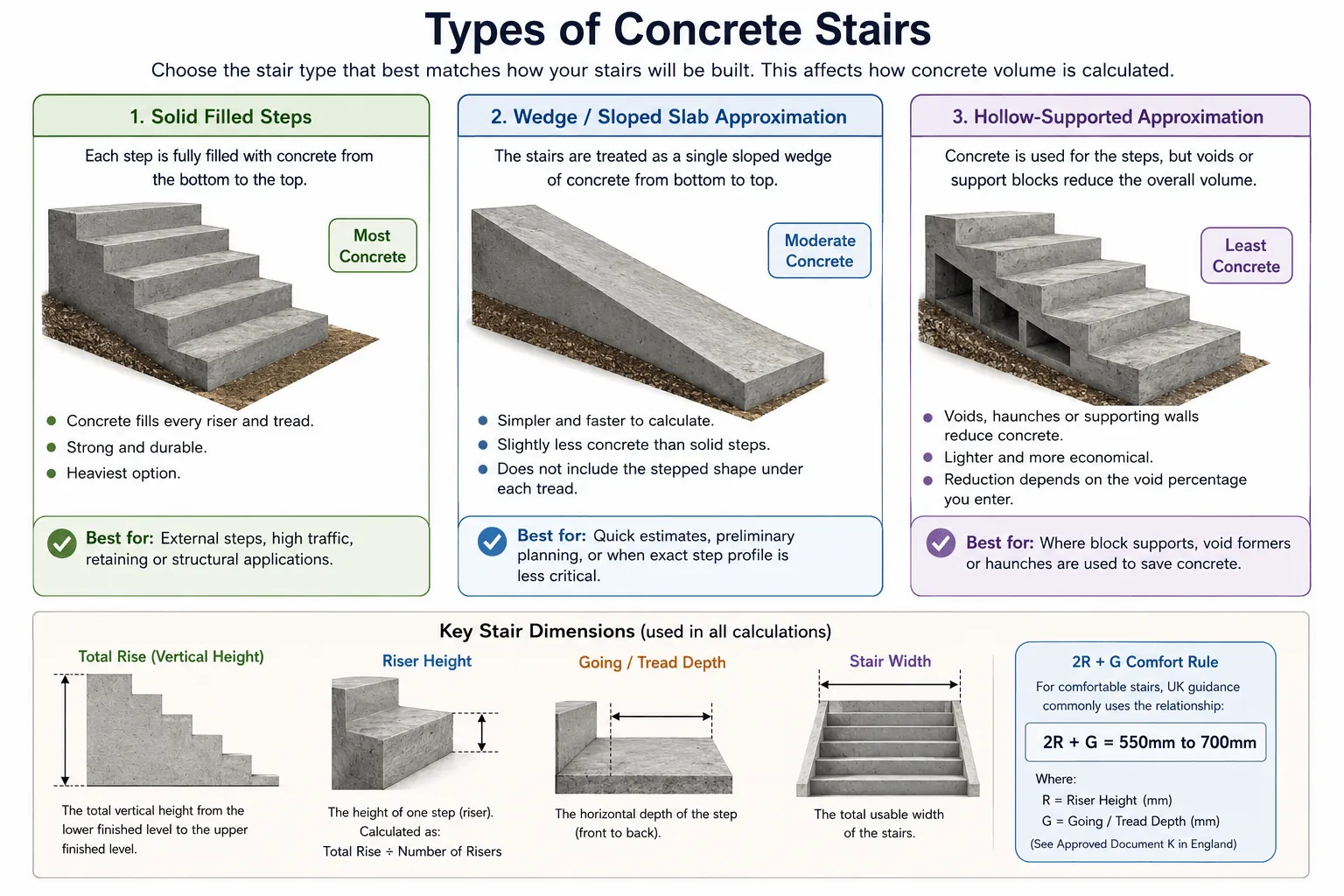
Choose the construction type:
- Solid-filled steps for full stepped concrete volume.
- Wedge / sloped slab approximation for a triangular sloped mass.
- Hollow-supported approximation where voids or support blocks reduce the concrete volume.
Add a landing pad if required, then set wastage, bag size and optional prices. Use Advanced mode when the base is uneven, or you need extra allowance for drainage fall, levelling, over-excavation or site tolerance.
Results Explanation
The calculator shows concrete volume including wastage, bag quantity, ready-mix quantity and material cost where prices are entered.
Results also include the number of risers, actual riser height, total going, 2R + G comfort rule value, stair concrete before allowances, landing concrete and any advanced extra concrete. Warnings appear for unusually low or high risers, a 2R + G value outside the calculator’s range, or landing height differences that may affect formwork accuracy.
How the Maths Works
The calculator converts all dimensions into metric internally.
For automatic risers, it divides the total rise by a target riser height of 170mm and rounds to the nearest whole riser.
Actual riser heighttotal rise ÷ number of risers
Total goingnumber of risers × tread depth
For solid steps, it adds each stepped layer of concrete:width × going × step height
For wedge mode, it uses:0.5 × total rise × total going × width
For the hollow-supported mode, it calculates the solid stepped volume, then applies the hollow reduction percentage.
Landing concrete is:landing depth × stair width × landing thickness
Advanced mode can add extra volume for uneven landing height, levelling pad thickness, over-excavation depth, drainage fall shaping and site allowance.
Final concrete is:stair volume + landing volume + advanced extras
Then wastage is added:final volume × (1 + wastage %)
Bag count is rounded up:total litres of concrete ÷ litres per bag
The built-in bag yields are 10 litres for 20kg bags and 12.5 litres for 25kg bags, with a custom yield option available.
Common Mistakes to Avoid
Do not measure only the visible face of the steps; use the full total rise and full stair width. Do not forget the landing pad, overdig or levelling layer if they are being poured at the same time. Avoid relying on bagged concrete for larger stair pours without checking labour time, access and mixing capacity. For external steps, plan drainage so water does not sit on the treads. After pouring the stairs, use our concrete drying and curing calculator to estimate curing milestones and drying times before putting the concrete into service.
FAQs
How much concrete do I need for concrete steps?
It depends on the total rise, going, width, number of risers, stair type and whether you are including a landing. This calculator estimates the stepped or wedge volume, then adds wastage and optional site allowances.
Is ready-mix or bagged concrete better for stairs?
Bagged concrete can suit small repairs or very small steps. Ready-mix is usually more practical for larger stair pours because it reduces mixing time and gives a more consistent batch. If you’re planning to use bagged concrete, use our concrete bags calculator for a more detailed estimate of bag quantities, supplied volume, total weight and leftover concrete.
How much wastage should I allow for concrete stairs?
A 10% allowance is a common planning figure for straightforward pours. Use more where the formwork is irregular, the ground is uneven, access is awkward, or you expect spillage.
What is a comfortable riser height for steps?
The calculator uses 170mm as its automatic target. UK stair guidance commonly considers rise and going together using the 2R + G relationship, often aiming for a value between 550mm and 700mm. Approved Document K covers stairs and protection from falling in England. If a ramp is being considered instead of steps, use our concrete ramp calculator to calculate concrete volume and slope ratios.
Do concrete steps need drainage?
Outdoor concrete steps should shed water away from the building and avoid ponding on treads or landings. The calculator’s advanced drainage fall field helps estimate extra shaping volume, but it does not design drainage.
What does hollow reduction mean?
It reduces the solid stepped concrete volume by the percentage entered, for approximate hollow-supported or voided construction.
Why does the calculator round bags up?
You cannot usually buy part of a bag, so the calculator rounds up to the next full bag.
Related calculators
Concrete Calculator
Rebar Calculator
Reinforcement Mesh Calculator
Concrete Footing Calculator
Disclaimer
This calculator is for material estimating only. It does not provide structural design, footing design, reinforcement specification, building control approval or accessibility compliance.
For stairs that form part of a building, check the relevant UK building regulations and local requirements. Approved Document K covers stairs, ramps, guarding, and protection from falling in England, and other UK nations may have their own technical guidance.