Concrete Weight Calculator
Estimate the weight of poured concrete from length, width and depth, with concrete type presets, density overrides and weight conversions.
- Calculation method: Length × width × depth
- Concrete type: Standard concrete
- Density used: 2,400 kg/m³
- Extra allowance: 0%
- Number of pours: 1
- Reinforcement allowance: Not included
- Weight is estimated from volume × density and should be treated as a planning figure.
- Concrete density varies by mix design, aggregate type, moisture content and reinforcement.
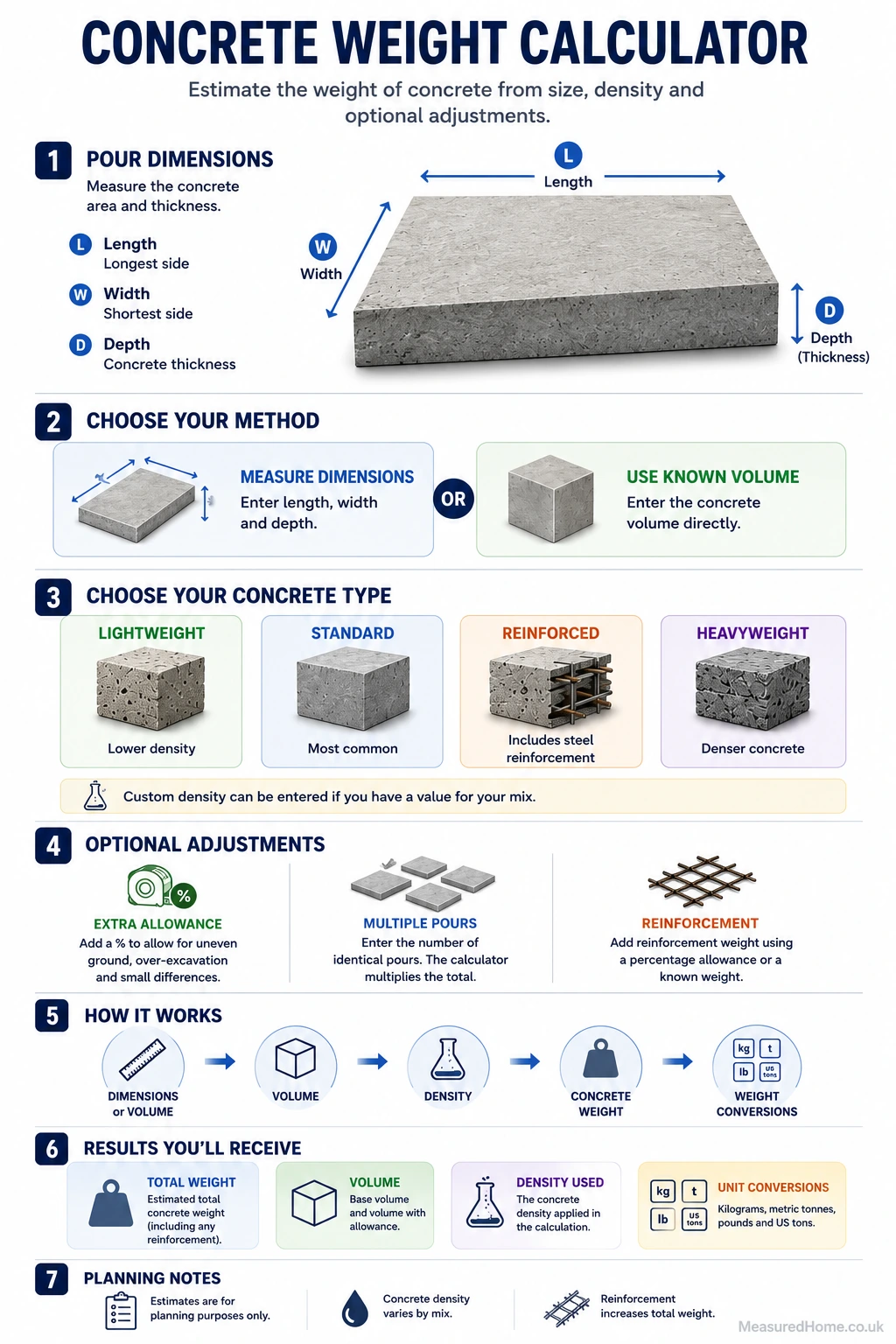
Use this Concrete Weight Calculator to estimate the weight of poured concrete from either its dimensions or a known concrete volume. Choose from standard concrete density presets or enter your own custom density, then optionally include reinforcement weight, multiple identical pours, material costs and transport load planning.
The calculator supports both metric and imperial units, automatically converts between measurement systems and displays the finished concrete weight in kilograms, tonnes, pounds and US tons.
PRO TIP: Weight often becomes more important than volume once concrete is being transported or lifted. Knowing the finished weight helps when planning trailers, skips, cranes, forklifts and delivery vehicles, especially for larger pours.
How to Use this Concrete Weight Calculator
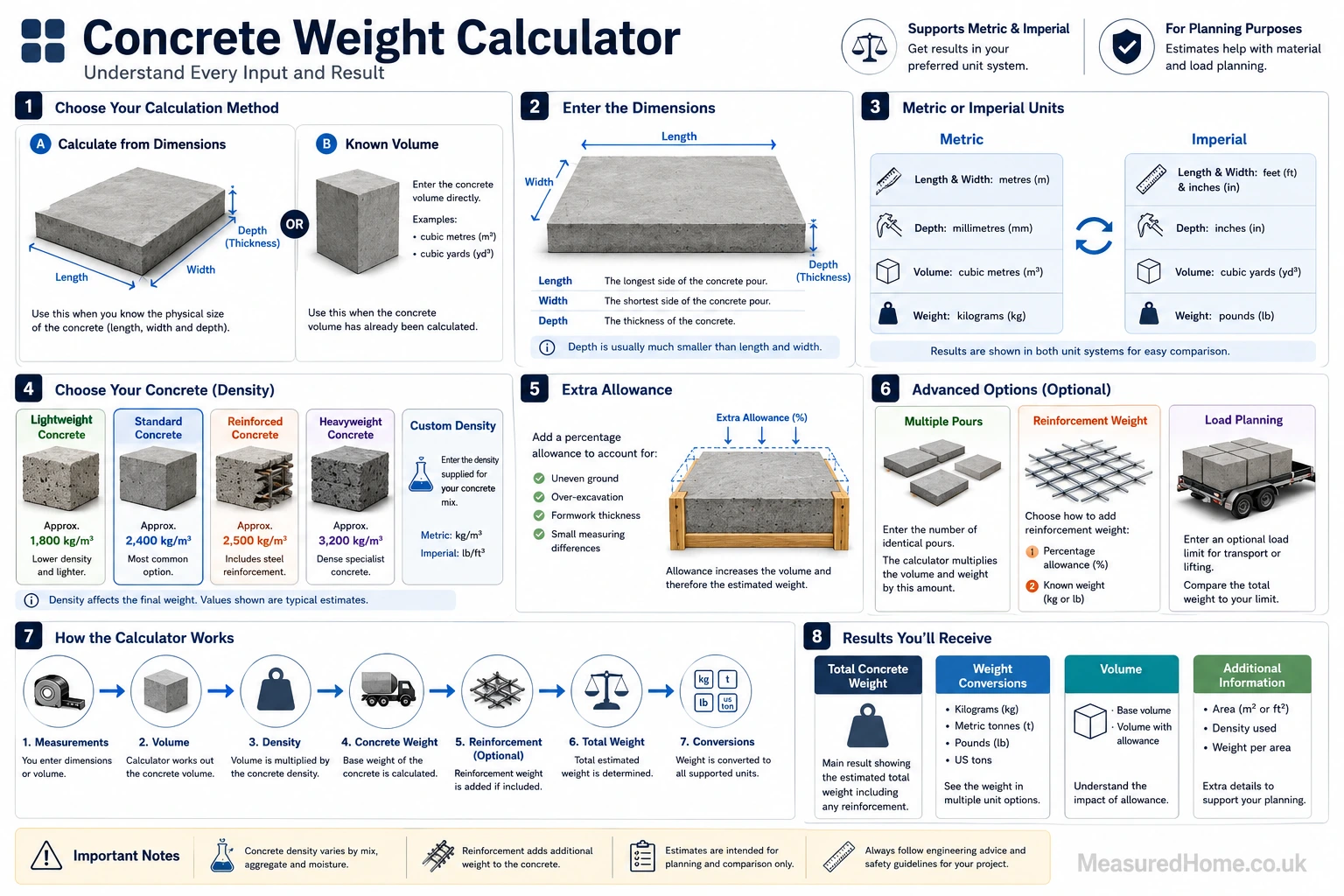
Choose whether to calculate from dimensions or a known concrete volume. For dimensions, enter the length, width and thickness of the concrete.
Select the concrete type or enter a custom density if you know the density of your mix. Add an optional allowance for uneven ground, over-excavation or estimating contingency.
Use Advanced mode to calculate multiple identical pours, include reinforcement weight, compare material costs or check the finished weight against a load limit.
Results Explained
Concrete Weight shows the calculated weight of the concrete only after any extra allowance has been applied.
Total Weight includes both the concrete and any reinforcement weight entered in Advanced Mode.
Area is displayed when calculations are based on dimensions and represents the slab or base footprint.
Base Volume shows the calculated concrete volume before any additional allowance is added.
Volume with Allowance includes the selected extra percentage.
Density displays the density used for the calculation, whether this comes from one of the built-in presets or your custom value.
Weight per Square Metre is displayed where an area can be calculated, providing a useful indication of loading.
How the Maths Works
When dimensions are entered, the calculator first converts every measurement into metric units before calculating volume.
For slabs and rectangular pours it uses:
Length × Width × Depth
If a known volume is entered instead, this step is skipped and the supplied volume is used directly.
If multiple identical pours have been selected, the base volume is multiplied by the number of pours before any additional allowance is added.
The optional allowance is then applied:
Base Volume × (1 + Allowance%)
Concrete weight is then calculated using:
Volume × Density
If reinforcement is included as a percentage, the calculator calculates reinforcement weight as a percentage of the concrete weight.
If a known reinforcement weight is entered manually, that value is simply added to the concrete weight.
Finally, the calculator converts the finished result into kilograms, tonnes, pounds and US tons for easier comparison and transport planning.
Understanding Concrete Density
One of the biggest factors affecting concrete weight is density. Even two pours with identical dimensions can have significantly different weights depending on the concrete mix.
The calculator includes four built-in density presets:
- Lightweight Concrete: 1,800 kg/m³
- Standard Concrete: 2,400 kg/m³
- Reinforced Concrete: 2,500 kg/m³
- Heavyweight Concrete: 3,200 kg/m³
If your supplier provides a different density, select Custom Density and enter the supplied value. The calculator converts imperial density values to metric internally before calculating the weight.
Common Mistakes to Avoid
- Don’t confuse concrete volume with concrete weight. Two pours with the same volume can weigh very differently if different concrete mixes are used.
- Don’t enter slab thickness in metres when using metric mode. The calculator expects thickness in millimetres.
- Don’t use an unrealistic density value. The calculator validates custom densities and accepts values roughly between 100 kg/m³ and 6,000 kg/m³.
- Don’t forget reinforcement if you’re estimating transport or lifting loads. The concrete alone may not represent the total weight.
- Remember that the optional allowance increases the calculated volume before the weight is calculated, so both volume and weight increase together.
FAQs
How much does 1 cubic metre of concrete weigh?
Standard concrete is commonly estimated at around 2,400 kg per cubic metre. Lightweight concrete can be closer to 1,800 kg/m³, while reinforced and heavyweight concretes are denser. The exact weight depends on the concrete mix and aggregates used, which is why this calculator allows you to choose different density presets or enter a custom density.
How much does a cubic yard of concrete weigh?
A cubic yard of standard concrete weighs approximately 4,000–4,100 lb (around 1.8 tonnes). Reinforced concrete is slightly heavier because of the additional steel, while lightweight concrete weighs considerably less. This calculator automatically converts between metric and imperial units so you can estimate weight regardless of which measurements you use.
Why does concrete’s weight vary?
Concrete doesn’t always weigh the same because different mixes use different aggregates. Lightweight concrete may contain expanded clay or similar lightweight aggregates, while heavyweight concrete uses dense aggregates for specialist applications such as radiation shielding. Water content, reinforcement and mix design can also affect the finished weight.
Is reinforced concrete heavier than normal concrete?
Yes. Reinforced concrete includes steel reinforcement, which increases the overall weight. This calculator lets you either choose a reinforced concrete density preset or add reinforcement separately as a percentage allowance or a known reinforcement weight, depending on the information you have available. If you need to calculate the reinforcement quantity and weight separately, use our rebar calculator.
Can I calculate the weight from dimensions instead of volume?
Yes. As long as you know the slab dimensions and the approximate concrete density, you can estimate its finished weight before ordering materials or arranging transport. If you need to calculate the concrete volume for a more detailed project shape first, use our concrete calculator, then enter the resulting volume here to calculate its weight.
Should I use wet concrete weight or cured concrete weight?
For most estimating purposes, standard density values are based on normal cured concrete. Fresh concrete contains additional water, and its density can vary slightly during placement, but for transport planning, demolition and general estimating, cured concrete density values are typically used.
How much does a 100 mm thick concrete slab weigh?
A 100 mm thick slab of standard concrete weighs approximately 240 kg per square metre. A 150 mm slab weighs around 360 kg/m². These figures are useful as quick planning estimates, although the exact weight depends on the concrete density selected.
Related Calculators
Concrete Footing Calculator
Concrete Column Calculator
Concrete Bags Calculator
Disclaimer
This calculator is intended for estimating the weight of concrete for planning, budgeting, transport and material handling. It is not a substitute for structural design, lifting engineering or statutory compliance. Always verify concrete specifications, reinforcement details and site conditions before ordering materials or planning lifting operations.